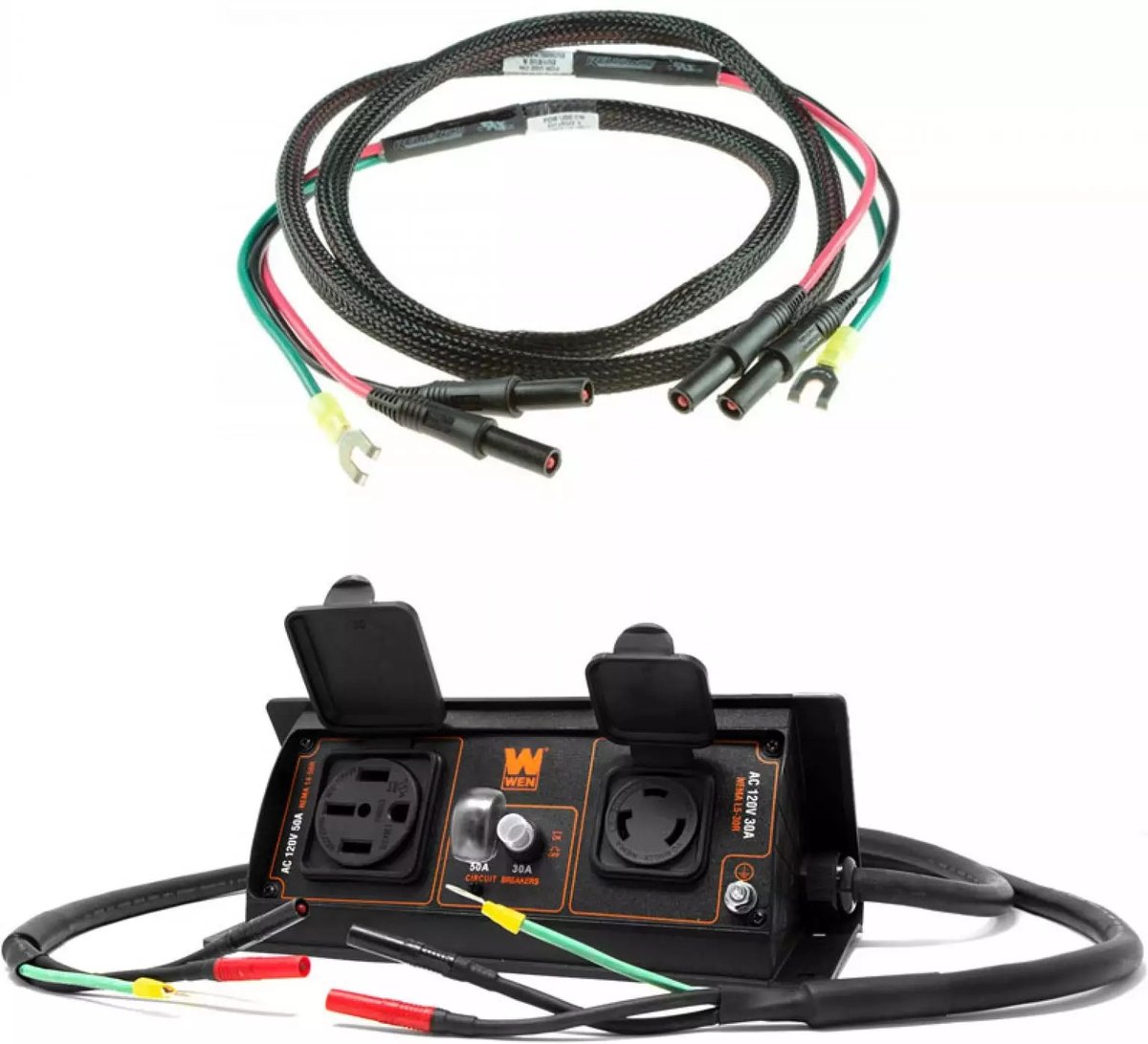
Beyond just owning a portable generator, unlocking its full potential—and ensuring its safe, efficient operation—hinges on the right Generator Accessories and Enhancements. Think of these additions not as mere afterthoughts, but as critical components that transform your basic power source into a tailored, reliable solution for home backup, outdoor projects, or recreational adventures. From boosting mobility to enhancing safety and extending runtime, the right gear makes all the difference in how you interact with your portable power.
At a Glance: Essential Generator Accessory Insights
- Stick to First-Party: Prioritize official manufacturer accessories for guaranteed compatibility, safety, and warranty protection. Third-party options often void warranties and can compromise performance.
- Mobility is Key: Wheel kits and lifting kits make moving heavy generators much easier, saving your back and simplifying deployment.
- Connectivity is Crucial: Adapters and heavy-duty extension cords are non-negotiable for safe and effective power distribution from your generator.
- Safety First for Home Backup: A transfer switch is a must-have for safely connecting a generator to your home's electrical system, preventing dangerous backfeeding.
- Monitor for Longevity: Meters (clamp and hour) provide vital data for performance checks and timely maintenance, extending your generator's life.
- Protect Your Investment: Storage and storm covers shield your generator from the elements, while maintenance kits and fuel stabilizers keep it running smoothly.
- Avoid Unrecommended Mods: Steer clear of third-party fuel conversion kits, silencers, and especially exhaust extensions—these are unsafe and often void warranties.
Why Smart Accessories Elevate Your Portable Power Experience
Your portable generator is a powerful tool, but its utility can be dramatically expanded and refined with the right companions. These aren't just gadgets; they're thoughtfully designed additions that solve common problems, enhance safety, streamline operation, and prolong the life of your investment. When you choose wisely, you're not just buying an accessory—you're investing in peace of mind and greater functionality.
A crucial guiding principle here: whenever possible, opt for accessories supplied directly by your generator's manufacturer. This isn't just a marketing ploy; it's about guaranteed compatibility, rigorous safety testing, and—most importantly—preserving your warranty. Straying into the realm of generic third-party accessories can sometimes lead to performance issues, safety hazards, and potentially nullify your generator's coverage.
Getting Your Generator Where It Needs to Be: Mobility Accessories
One of the biggest hurdles with portable generators, especially larger models, is their weight. Lifting and moving a heavy machine can be a real struggle, but the right accessories turn a two-person job into an effortless one-person task.
Wheel Kits: Effortless Horizontal Movement
If you've ever wrestled a 100+ pound generator across your yard, you know the value of a good set of wheels. Wheel kits typically include 2-4 attachable wheels and often a folding handle, significantly improving horizontal mobility. Many generators over 110 lbs wisely come with these integrated, but if yours didn't, it's a worthwhile upgrade. Expect to spend $30-150 for a quality kit that perfectly fits your generator's frame, making relocation a breeze.
Lifting Kits and Hanger Kits: For the Vertical Challenge
Sometimes, "portable" means more than just rolling it around. For industrial settings or situations where a crane is involved, lifting kits (or hanger kits) provide a sturdy steel crossbar designed for safe vertical transport. These are less common for typical home users but are invaluable in construction or utility environments. If your generator requires mechanical lifting, these kits are often included or available for $20-50, ensuring secure hoisting.
Connecting with Confidence: Adapters and Extension Cords
Once your generator is in place, the next step is connecting it to your appliances, devices, or even your home's electrical panel. This is where adapters and extension cords become indispensable, ensuring you can bridge any gap safely and efficiently.
Adapters: Solving Outlet Mysteries
Generators come with various outlet configurations, and sometimes your device or RV plug simply won't match. Adapters are your compatibility heroes, resolving these issues quickly and safely. Common scenarios include connecting an RV with a TT-30R plug to a generator's L5-30P outlet, or a larger RV's 14-50R to an L14-30P generator receptacle. These handy problem-solvers usually cost around $20 and are essential for versatile connectivity.
Extension Cords: Bridging the Distance Safely
Perhaps the most universally needed accessory, heavy-duty extension cords are a must-have for every generator owner. Remember, your generator should always be operated outdoors, at least 20 feet away from your home, windows, and doors, to prevent carbon monoxide poisoning. This means you'll almost certainly need a cord to bring power inside or to your devices.
When choosing, focus on "heavy-duty" options, typically 10- to 12-gauge, to safely handle the amperage most devices require without overheating. Lengths range from a few feet to 100 feet, giving you flexibility to maintain safe generator placement. A quality, heavy-duty extension cord for generator use will run you $50-200, an investment that pays dividends in safety and convenience. For more insights, you might want to consider selecting the right extension cord for your needs.
Specialized Electrical Connections: Bonding Plugs
For the more advanced generator user dealing with specific grounding requirements, bonding plugs (sometimes called Edison plugs) play a niche but important role. These small devices establish a neutral-to-ground bond within the generator's electrical system. Why does this matter? Some advanced electrical protection products might misinterpret a "floating neutral" (common in many portable generators) as an ungrounded condition, leading to nuisance trips or improper operation.
By creating a neutral-to-ground bond, bonding plugs resolve this issue, allowing such protection systems to function correctly. This is primarily useful for those running a floating neutral generator and integrating it into more complex electrical setups. They're an inexpensive fix, usually under $20.
Doubling Your Power: Parallel Kits for Inverter Generators
Have you ever wished your compact inverter generator had just a bit more oomph? Parallel kits are the answer. These accessories allow you to link two compatible inverter generators together, combining their power output to run larger appliances or more devices simultaneously. It's like having a bigger generator without the bulk and expense of a single, higher-wattage unit.
Typically consisting of specialized cables or a small control box, parallel kits offer incredible flexibility. You can use one generator for lighter loads or combine them for peak demand. Do note that the combined output is limited by the kit itself, and isn't always purely additive. As with all accessories, sticking to first-party kits from the generator manufacturer is highly recommended to ensure flawless compatibility and performance. Depending on the brand, type, and maximum output, parallel kits generally cost $50-100. If you're considering this for more power, you might also be interested in learning more about quiet portable generators which are often the type that can be paralleled.
Keeping Tabs: Essential Meters for Optimal Performance
Understanding what your generator is doing—how much power it's producing, what your devices are consuming, and how long it's been running—is crucial for both efficient operation and timely maintenance. Meters provide this vital feedback.
Clamp Meters: Your Electrical Detective
A clamp meter, a type of multimeter, is an indispensable tool for any serious generator owner. These devices allow you to safely measure your generator's output (amps, voltage, wattage) at various sockets and monitor the consumption of connected appliances. This helps you determine both starting and running watts, ensuring you don't overload your unit.
Even if your generator boasts a built-in data center, a separate clamp meter offers an independent verification and allows you to test individual circuits or devices. If your generator doesn't have a data center, a clamp meter is an absolute must-have. A good quality one can be purchased for around $50, making it an affordable investment in electrical literacy and safety.
Vibration-activated Hour Meters: The Maintenance Reminder
Like any engine, your generator requires regular maintenance based on its operational runtime. Oil changes, filter replacements, and spark plug checks are all tied to how many hours the engine has actually run. A vibration-activated hour meter simply attaches to your generator and silently tracks its operational runtime.
If your generator lacks a built-in display for runtime, this simple device is a must-have. It takes the guesswork out of maintenance scheduling, ensuring you keep your generator in prime condition and extend its lifespan significantly. These handy meters are quite inexpensive, typically around $15.
Powering Your Home Safely: The Transfer Switch Imperative
When you plan to use your portable generator to power essential circuits in your home during an outage, a transfer switch isn't just an accessory; it's a non-negotiable safety device. Its primary purpose is to prevent "backfeeding"—a dangerously unsafe condition where your generator's power flows back into the main electrical grid, potentially electrocuting utility workers.
A transfer switch safely isolates your home's electrical system from the grid and allows you to switch power between the utility and your generator. This ensures that you're only receiving power from one source at a time.
Manual vs. Automatic Considerations
While Automatic Transfer Switches (ATS) exist, most portable generators don't automatically start when the power goes out, even with an ATS. You'll typically need to manually start the generator and then flip the switch. However, a select few high-end portable generators (like certain Genmax and Ford models mentioned in our research) do support automatic startup with an ATS, offering a more hands-off experience.
For safety and convenience when powering your house, a basic manual transfer switch (like a Reliance Controls 30-amp unit) is a crucial investment, costing several hundred dollars plus installation. It's the only safe and code-compliant way to integrate your portable generator into your home's wiring. For a deeper dive into the setup, you might consult what to know about transfer switch installation.
Boosting Runtime: Extended-Run Fuel Tanks
Running out of fuel in the middle of a power outage is incredibly frustrating. Extended-run fuel tanks increase your generator's operational time by adding extra fuel capacity, meaning fewer interruptions for refueling.
Gravity-fed Tanks: The Simple Boost
The simpler and generally manufacturer-approved option, gravity-fed tanks, refill your generator's original tank via a hose. For this to work, the auxiliary tank must be installed higher than your generator, allowing gravity to do the work. These basic kits, including the tank, hose, and a modified fuel cap, start at around $100. They're a practical way to extend runtime without complex modifications.
Pump-fed Systems: A Word of Caution
More advanced pump-fed systems aim to bypass the generator's original tank entirely. However, these often require modifications to the generator's fuel system. Manufacturers generally do not recommend such alterations, as they can void your warranty, compromise emission ratings, and potentially lead to performance issues or safety hazards. For these reasons, it's best to stick to gravity-fed systems or simply keep extra fuel cans on hand.
Longevity & Peak Performance: Maintenance Must-Haves
Just like a car, your generator needs consistent care to perform reliably and last for years. Having the right maintenance accessories on hand makes this process straightforward. Regular maintenance is key, and you can find comprehensive generator maintenance tips to keep your unit running smoothly.
Fuel Stabilizers: Your Fuel's Best Friend
Gasoline can degrade over time, especially when stored for weeks or months, leading to gum development that can clog carburetors and fuel lines. This is particularly problematic for generators used only occasionally. Fuel stabilizers are highly recommended; they prevent fuel degradation, protect your carburetor, and significantly extend the shelf life of your fuel, ensuring your generator starts reliably when you need it most.
Magnetic Oil Dipsticks: Reducing Engine Wear
Many small engines, including those in portable generators, lack oil filters to catch metallic debris. A magnetic oil dipstick, which replaces your standard dipstick, features a powerful magnet designed to manually extract metal shavings from the oil. This simple addition can significantly reduce engine wear over time, especially during the crucial break-in period. Just be sure to check for the correct thread size before purchasing. These typically cost $15-20.
Maintenance Kits: Convenience Bundles
For first-time generator owners, maintenance kits are a fantastic way to get started. These bundles typically include essential items like air filters, oil, spark plugs, and cleaning equipment. They offer convenience by providing everything you need in one package. For subsequent maintenance, you can buy individual components as needed, or opt for another kit if it proves more economical.
Protecting Your Investment: Generator Covers
Your generator is an investment, and protecting it from the elements and everyday wear and tear is crucial for its longevity and reliable operation. Covers are an easy way to shield your unit.
Storage Covers: Keeping Dust at Bay
When your generator isn't in use, a storage cover protects it from dust, dirt, and minor abrasions. These are typically lightweight fabric covers designed for indoor storage or protection in a garage or shed. Most storage covers are not suitable for outdoor elements or for use while the generator is running. Every generator owner should have one, costing $10-30, to keep their unit clean and ready for action.
Storm Covers: Running Strong in Bad Weather
Planning to run your generator during rain, snow, or high winds? A storm cover (often called a running cover) is a highly recommended accessory. These are heavy-duty, water-resistant or waterproof covers specifically designed to allow generator operation in adverse weather. They feature sturdy backbones or frames to resist wind and prevent water from getting into sensitive areas while ensuring proper airflow for cooling and exhaust. Prominent brands like Champion Power Equipment and Westinghouse offer excellent storm covers. If you anticipate needing your generator in bad weather, this $150-200 investment is essential for safe, uninterrupted power.
Conquering Environmental Extremes: Cold & High-Altitude Kits
Most generators are designed to perform well in a range of conditions, but extreme cold or high altitudes can present specific challenges. Specialized kits address these to ensure optimal operation.
Cold Weather Kits: Thriving in Freezing Temperatures
In freezing conditions, condensed water vapor in the crankcase breather tube can freeze, leading to blockages and potentially causing oil leaks or other engine damage. Cold weather kits typically include a heating coil designed to prevent this freezing. If you plan to use your generator regularly in sub-freezing temperatures, this kit is highly recommended. The part itself usually costs $100-300.
Altitude Kits: Breathing Easy at Elevation
At higher altitudes (generally above 2000 feet), the air density is lower, meaning less oxygen is available for combustion. Standard carburetor settings will run too rich, leading to reduced performance and potential engine damage. Altitude kits consist of different carburetor jets that adjust the fuel-to-air mixture for thinner air.
Important Note: Modifying your carburetor may void your generator's warranty. Furthermore, improper use of an altitude kit (e.g., using a high-altitude kit at lower elevations) can damage the engine by making it run too lean. Always consult your generator's manual and be sure you're operating at the specified altitude for the kit. These specific jets are usually quite inexpensive, costing only a few dollars.
Modifications to Avoid: What Not to Do with Your Generator
While many accessories enhance your generator, some modifications are strongly unrecommended. These can compromise safety, void warranties, or even cause irreparable damage. It's crucial to understand these pitfalls to protect your investment and, more importantly, yourself.
Fuel Conversion Kits: Playing with Fire (and Warranty)
Third-party fuel conversion kits promise the ability to run your gasoline generator on other fuels like propane or natural gas. While appealing in concept, these kits are fraught with problems. They are not manufacturer-approved, will almost certainly void your generator's warranty, and can violate emission regulations. Furthermore, they can lead to decreased performance, fuel delivery issues, and long-term damage to your engine. It's best to stick to the fuel your generator was designed for.
Silencers/Mufflers: A Risky Quiet
The noise of a running generator can be a nuisance, and some users seek aftermarket silencers or mufflers. However, these require modifications to the exhaust system which can restrict or block exhaust flow. Such third-party additions are almost guaranteed to void your warranty and can lead to engine overheating and damage. If noise is a primary concern, consider investing in a quiet inverter generator instead of attempting risky modifications. Explore options for quiet portable generators that are designed with lower noise levels in mind.
Exhaust Extensions: A Deadly Risk
This cannot be stressed enough: NEVER use exhaust extensions if they encourage operating your generator indoors or too close to your home. Generators produce carbon monoxide, an odorless, colorless, and deadly gas. Exhaust extensions, while seemingly useful for directing fumes, can create a false sense of security and encourage unsafe practices. Running a generator indoors, in a garage, or even too close to windows or doors poses a severe risk of carbon monoxide poisoning and fire. Your generator must always be run outdoors, at least 20 feet from your home, with its exhaust directed away from living spaces. Don't compromise on this critical safety guideline. For comprehensive guidance on safe operation, refer to critical portable generator safety guidelines.
Making the Smart Choices for Your Generator Setup
Investing in the right generator accessories and enhancements is about optimizing your portable power experience. Whether it's making your unit easier to move, safer to connect, or more resilient in harsh conditions, each accessory plays a role in transforming your generator from a simple machine into a highly capable and reliable power solution.
Remember to prioritize official manufacturer-supplied accessories for guaranteed compatibility and to protect your warranty. Carefully consider your specific needs—do you need mobility for frequent moves, robust protection for outdoor operation, or precise monitoring for maintenance? By thoughtfully selecting your accessories, you'll ensure your generator is always ready to perform, giving you the power you need, exactly when you need it, for years to come.